Skip links

Fragmented Realities by Eugenio Marongiu

Eugenio Marongiu

Fragmented Realities

Sardinia, Italy | @katsukokoiso.ai

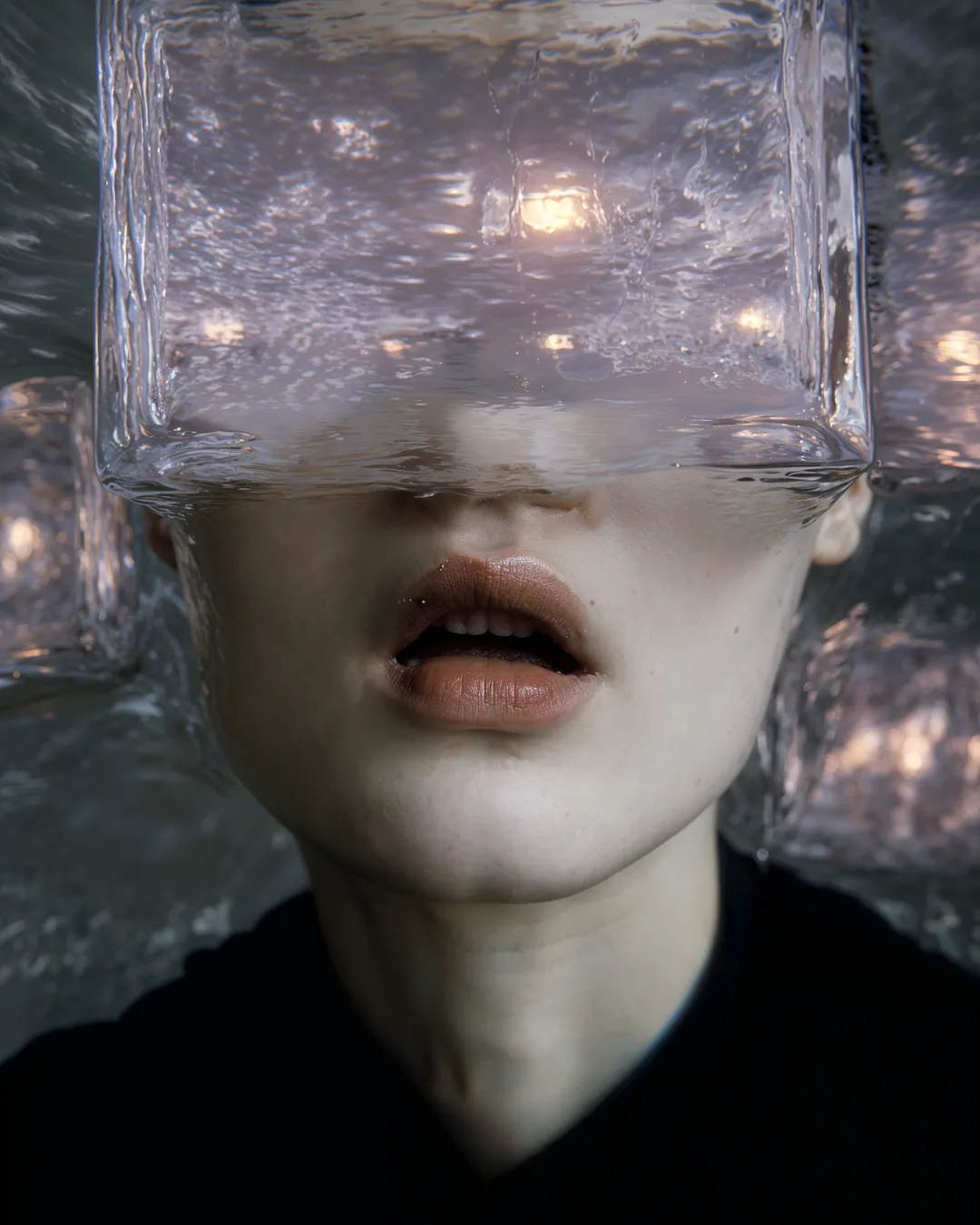
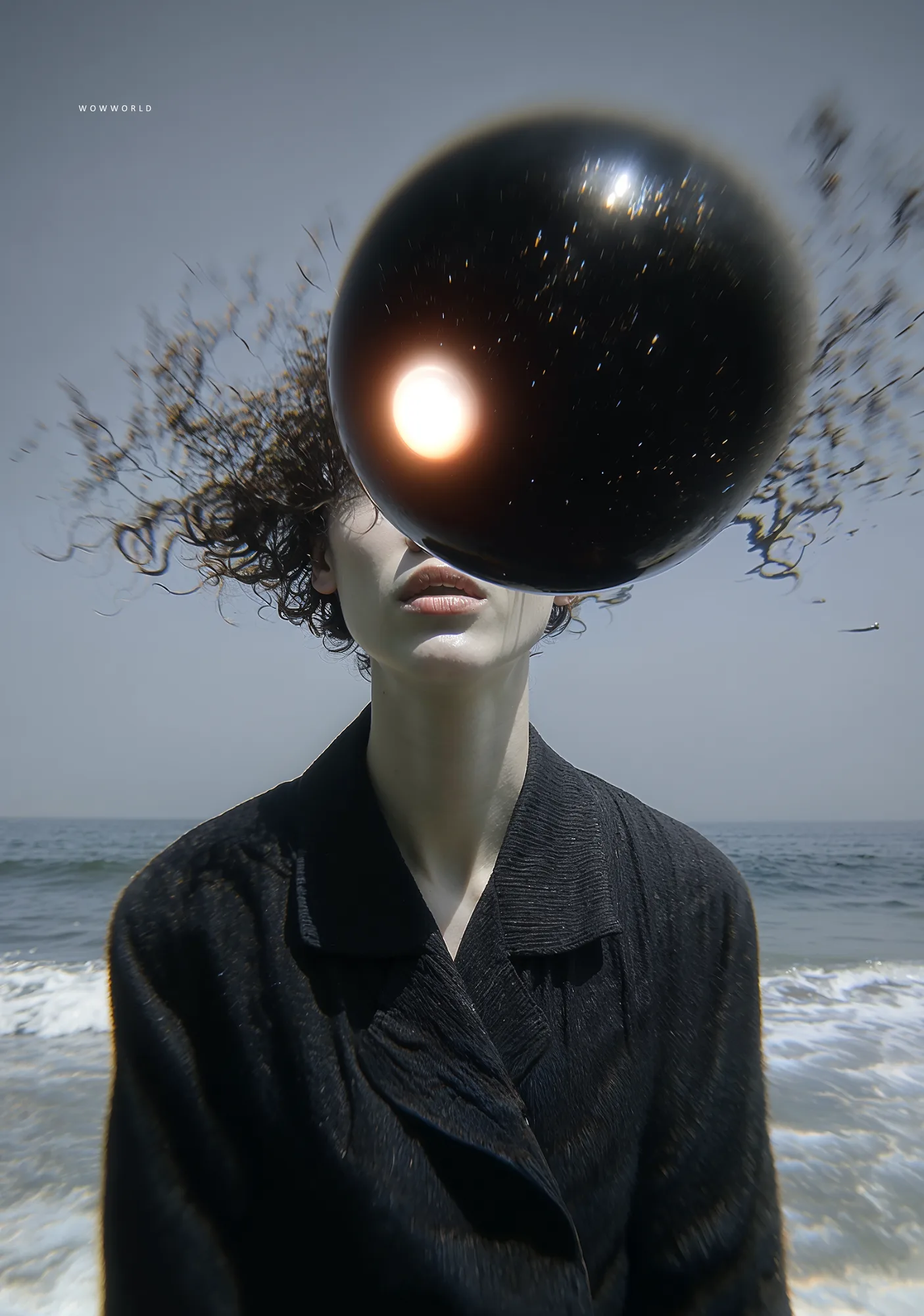
Eugenio Marongiu works in the quiet aftermath of rupture. His images do not capture moments of action, nor do they attempt to resolve the fractures they reveal. Instead, they linger in the stillness that follows transformation—the suspended state where identity has already shifted, but has not yet settled into coherence. In Fragmented Realities, the human figure becomes a site of introspection, shaped by absence as much as by form.

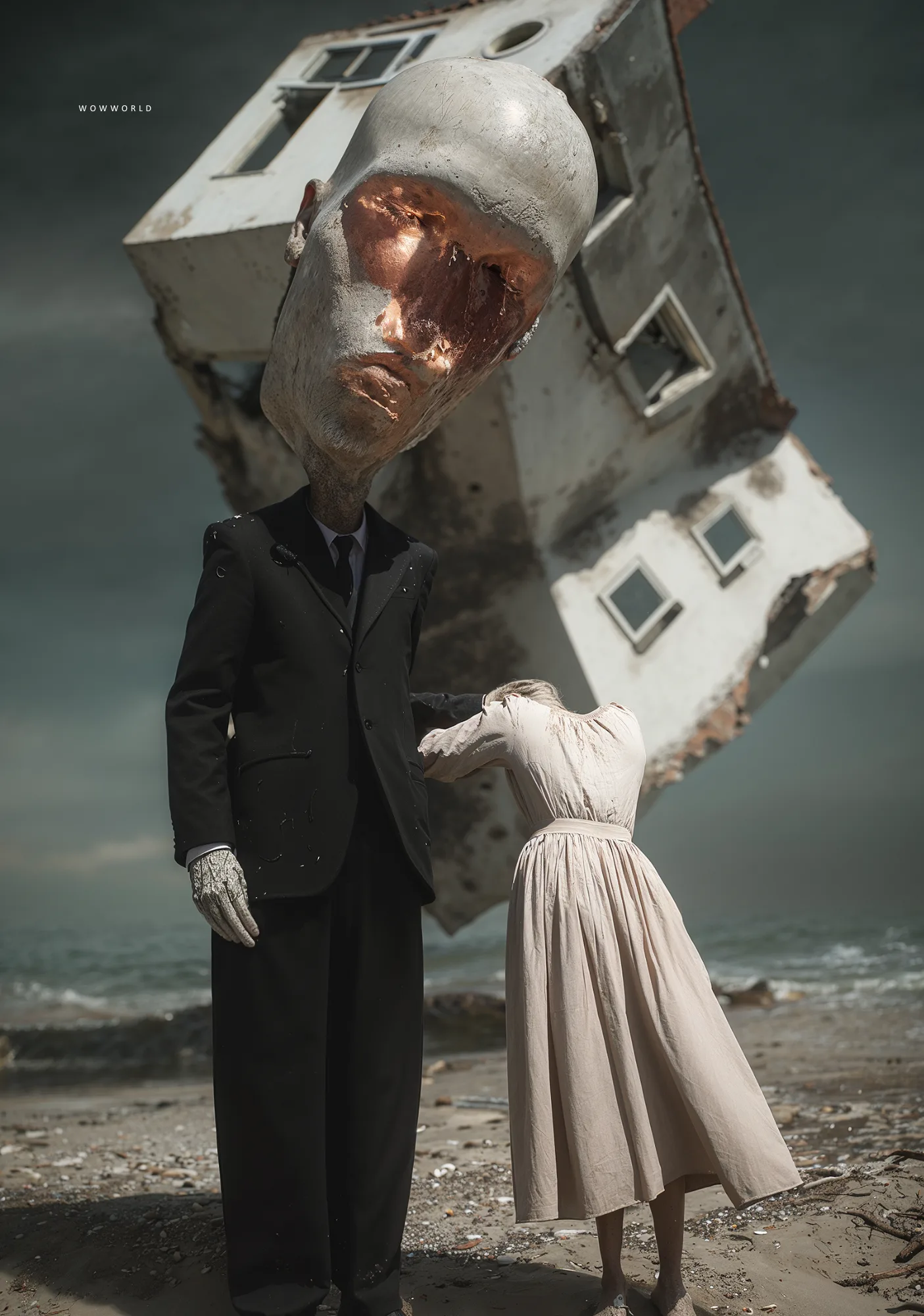
At first glance, Marongiu’s portraits appear solemn and composed, almost ceremonial in their restraint. Figures are centered, isolated, and rendered with deliberate clarity. Yet beneath this composure lies a subtle unease. Faces divide, features dissolve, and symbolic intrusions interrupt the familiarity of the human form. These disruptions are never abrupt. They unfold with precision, suggesting that fragmentation is not an act of destruction, but a necessary process of revelation.

Marongiu’s work exists in a liminal emotional territory—between vulnerability and authority, between memory and myth. He approaches identity not as a fixed construct, but as a layered condition shaped by instinct, inheritance, and internal contradiction. In doing so, Fragmented Realities becomes less a series of images and more a meditation on perception itself: how we assemble meaning from fragments, and how the self persists even when its surface begins to break.

“Fragmentation is not loss. It is the moment when hidden structures become visible.”
— Eugenio Marongiu

Eugenio Marongiu - Fragmented Realities | Sardinia, Italy | @katsukokoiso.ai

Rupture, Myth, and the Silent Figure: Identity as Archaeology

One recurring strategy in Fragmented Realities is the deliberate alteration of the face—the most immediate marker of identity. In several works, facial features are bisected, obscured, or replaced entirely by symbolic forms. Beaks, skeletal bird skulls, and avian silhouettes emerge where mouths or noses should be, fusing animal and human anatomy into a single, unresolved presence. These hybrids do not suggest fantasy; they suggest instinct. The animal form operates as an extension of the psyche, a visual language for impulses and memories that exist beyond articulation.

Bird symbolism, traditionally associated with freedom or transcendence, is rendered here with restraint and ambiguity. The avian elements are often rigid, fossil-like, or integrated into the figure in ways that feel weighty rather than liberating. Transformation, in Marongiu’s work, is not effortless. It demands surrender. The hybrid figure becomes a marker of that cost—an acknowledgement that becoming something new often requires the erosion of familiar boundaries.

Another body of work within the series emphasizes division rather than replacement. Faces are split along vertical axes, revealing inner voids or mirrored dissonance. This division resists spectacle. There is no violence in the cut, no dramatic gesture. The split functions as an opening, an archaeological gesture that exposes layers beneath the surface. Marongiu treats the human form as an artifact—something shaped by time, belief, and accumulated experience. Fragmentation, here, is a method of excavation.

In works where the figure remains largely intact, atmosphere carries the weight of disruption. Muted palettes dominate: bone whites, deep blacks, ashen greys, and subdued earth tones. These restrained colors lend the images a sculptural, almost petrified quality. Even when digital processes are evident, the surfaces feel tactile and weathered, blurring the boundary between flesh and object. The figure appears less alive in a biological sense and more alive as a vessel of memory.


Eugenio Marongiu - Fragmented Realities | Sardinia, Italy | @katsukokoiso.ai

Marongiu’s process is defined by restraint and intentionality. He does not overwhelm the viewer with excessive symbolism or narrative cues. Instead, he constructs images that withhold meaning, inviting prolonged engagement rather than immediate interpretation. Silence plays a central role in this approach. The absence of overt emotion or gesture creates space for reflection, positioning the viewer not as a spectator, but as a participant in the act of perception.

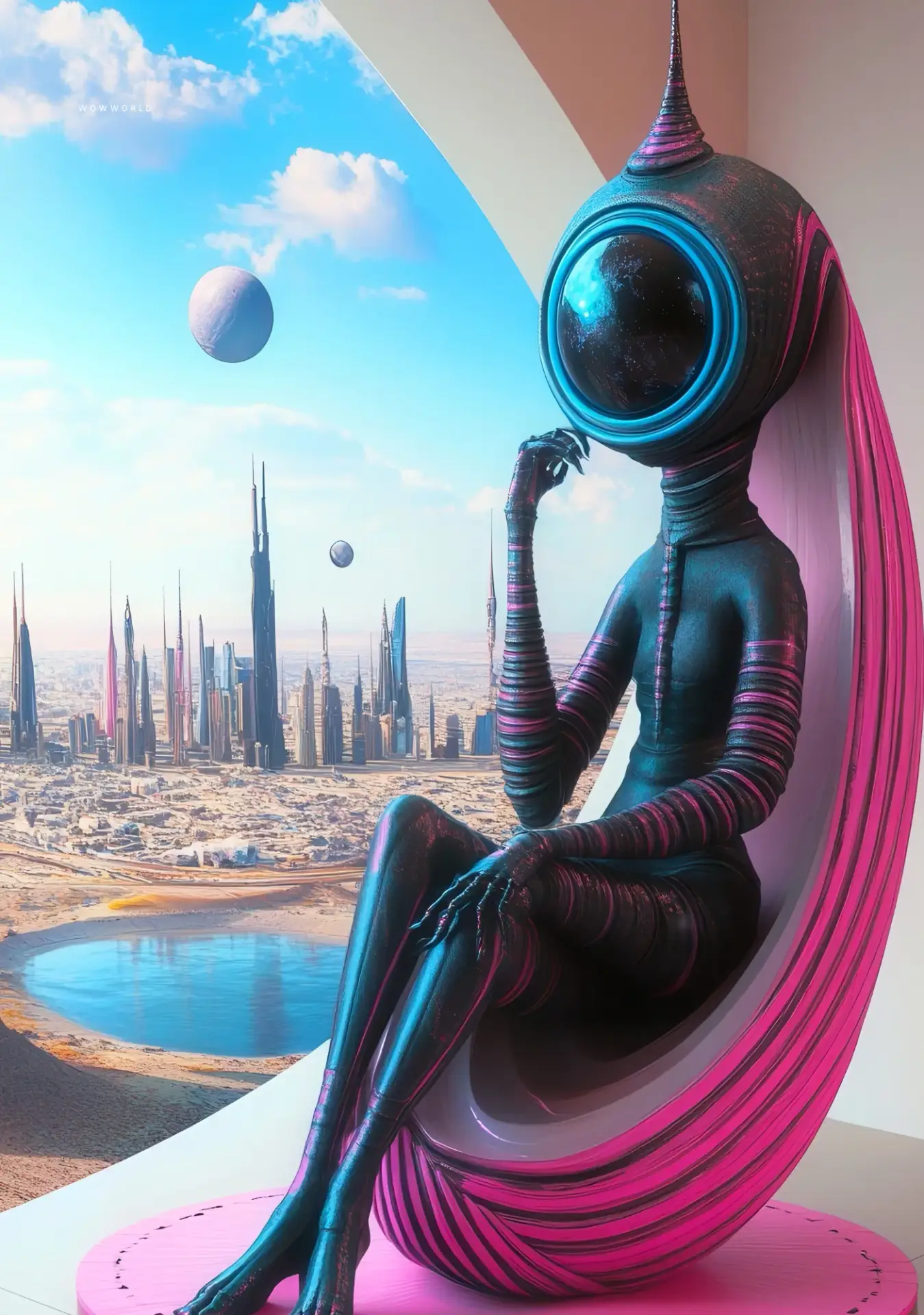
Technology, including AI-assisted processes, is present but never foregrounded. It functions as a collaborator—one that enables precision, layering, and subtle manipulation—rather than as a subject in itself. Marongiu uses these tools to refine atmosphere and structure, not to display technical virtuosity. The result is imagery that feels timeless, resistant to trend or novelty. The digital disappears into the service of emotional clarity.

contact us
02

Be the Next
Story We Tell.

At WOW WORLD

We spotlight visionaries who use AI to reshape creativity, emotion, and culture. Just like many artists featured in our past issues, they prove that when technology meets imagination, storytelling knows no limits. 👉 Do you have a project that turns emotion into innovation?
👉 Want to join a global conversation redefining the future of design?
📖 Submit your work and be featured in the next WOW WORLD issue.
🎨 Inspire the next generation.

    latest posts
    01

    Read More!

    Forms in Motion by Lindsay Kokoska

    Lindsay Kokoska Forms in Motion Canada | @infinite_mantra Lindsay Kokoska’s work exists in a state of perpetual unfolding. Her figures…
    Explore
    Drag