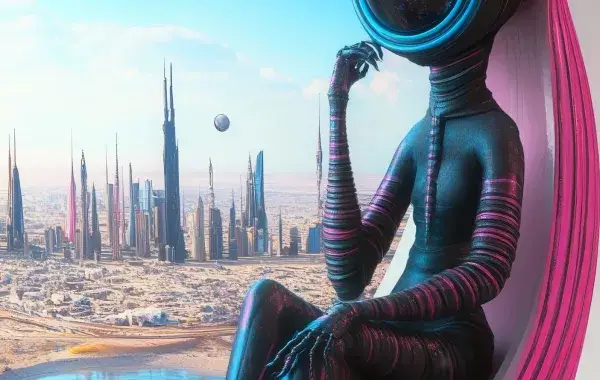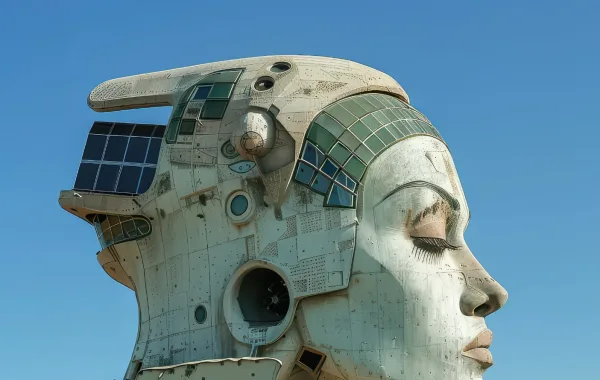



In a world where structures rarely receive second chances, Xinyi Wang imagines an architecture that refuses to die. An Australian based architect and artist, Wang works at the intersection of circular design,
adaptive reuse, and collective memory. His practice asks:
What happens to buildings after they outlive their function?
Instead of treating architecture as linear built, used, abandoned he reveals its capacity for rebirth.
His environments feel like quiet resurrections: steel reinterpreted, timber recontextualized,
water reframed as connective tissue. Through Artfix Morph, Wang constructs spaces where utility and emotion coexist, where transformation itself becomes design language.
Wang’s process begins with observation:
how people inhabit systems built for movement,
how routines create meaning,
and how structures accumulate memory simply by being used.
He studies the choreography of daily life commutes, pauses, flows of pedestrians
and reimagines these patterns as opportunities for renewal.
To him, architecture is an organism, not an object.
It moves, adapts, and survives through reinterpretation.
His principles emerge from this belief:
that endings are beginnings,
that demolition can be storytelling,
that material carries memory.
His aesthetic blends light industrial honesty with an almost meditative spatial poetry.
Steel beams become archives.
Timber planks become timelines.
Voids become stages.
Wang designs environments where the past is not erased but metabolized
where function evolves into narrative.
Nothing is discarded; everything is reimagined.
“I don’t redesign buildings I reinterpret their afterlives.”
Xinyi Wang - Artfix Morph | Australia | @xytopia.design
Steel, Memory, and Motion: Architectures of Circular Rebirth
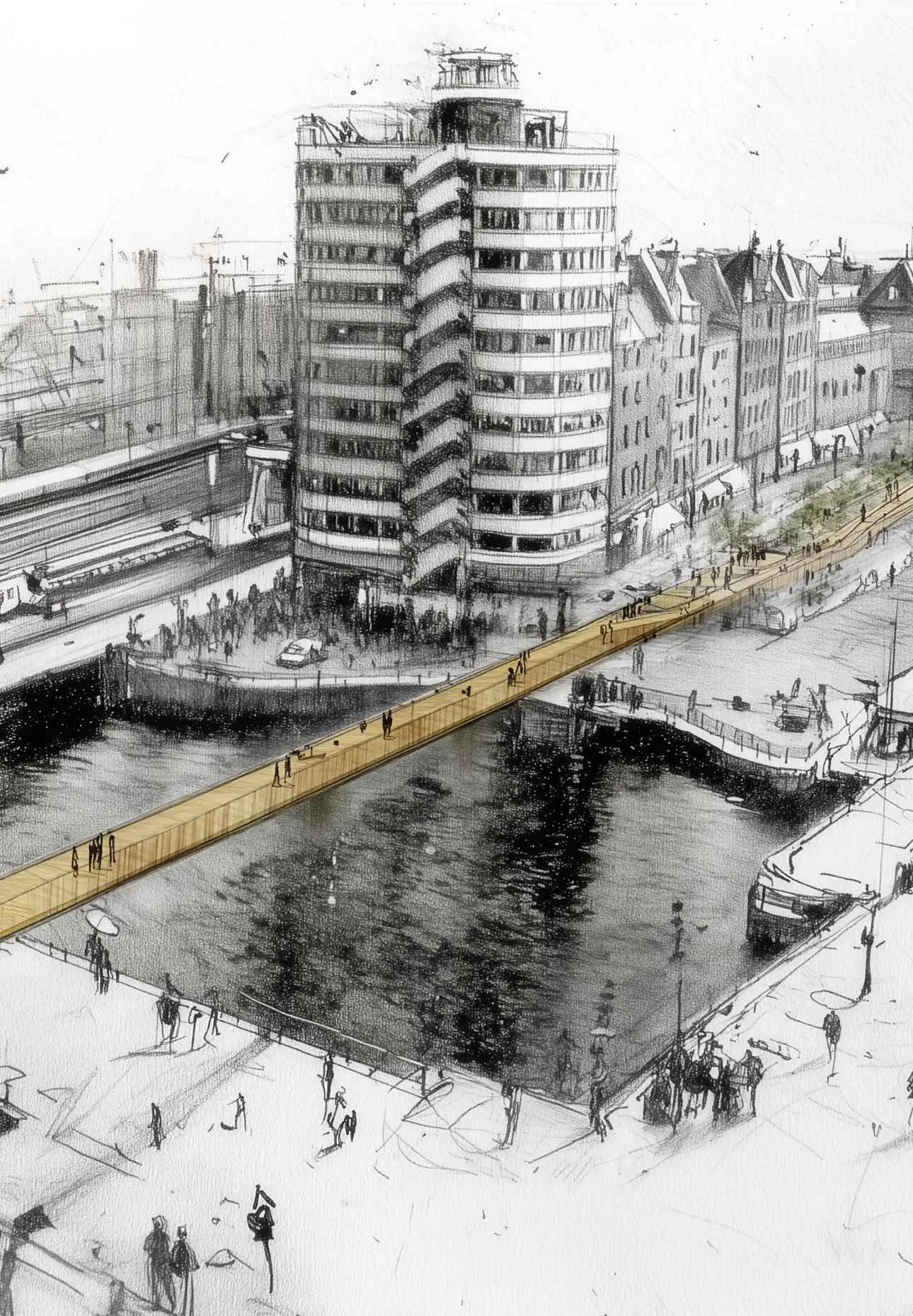
In “The Fietsflat Reimagined,” Wang transforms a dismantled bike-parking structure into a circular monument of motion and memory. Instead of demolishing the industrial shell, he reassembles it as a choreography of ramps, frames, and floating platforms. Steel beams, once purely functional, become an archive of human movement; the voids left behind become urban stages. The structure is part ruin, part renewal — a reminder that cities breathe when they allow themselves to change shape.
In “Loop Pavilion,” a temporary transit station is reborn as a community gathering space. Its scaffolding is reconfigured into circular corridors that capture shifting sunlight throughout the day. The pavilion becomes a living sundial: morning gold filtering through mesh, afternoon shadows tracing arcs along the floor, evening light pooling in the center like memory collecting at dusk. Here, time becomes architecture, and reuse becomes ritual.
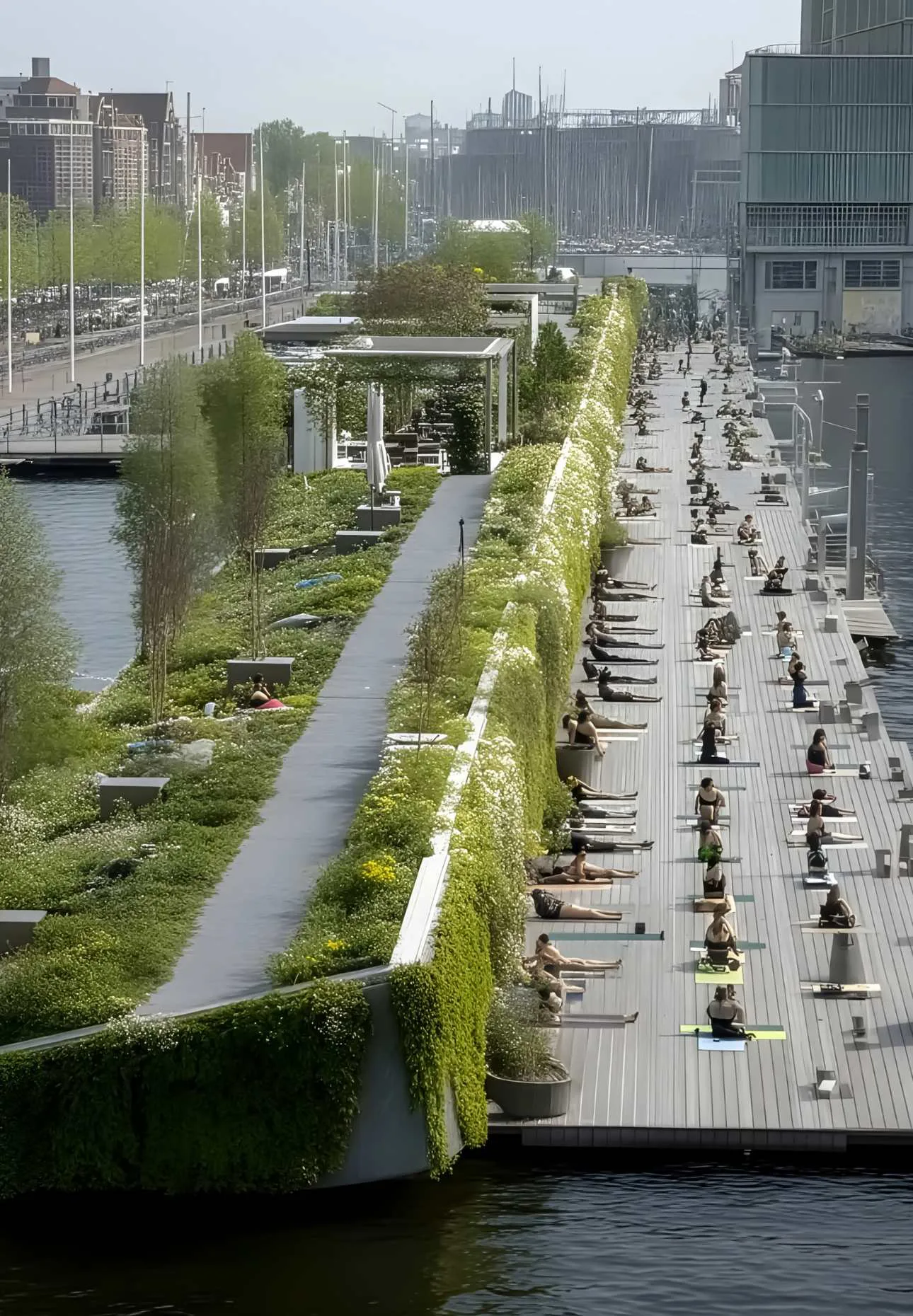
In “Harbor Frames,” Wang turns abandoned maritime infrastructure into a sequence of open-air rooms overlooking water. Former loading docks become contemplative platforms; rusted cranes metamorphose into sculptural markers of motion. Timber decks recall the ships that once docked there, while the tide animates the space with its own rhythm. The project embodies Wang’s belief that water is a narrative instrument — always returning, always reshaping, always reminding the city of its origin stories.
Together, these works reveal a philosophy of urban renewal grounded not in novelty, but in continuity. Wang teaches that cities evolve when they remember their forgotten structures not by freezing them, but by letting them transform.
Xinyi Wang - Artfix Morph | Australia | @xytopia.design
Xinyi Wang Optimism as Material, Architecture as Renewal
For Wang, optimism is the most resilient building material. It is adaptable, regenerative, and endlessly renewable. His architecture does not worship permanence; it celebrates resilience. He rejects the idea that demolition marks the end of a structure’s life. Instead, he treats dismantling as a form of authorship—an opportunity to rewrite meaning through reuse.
Central to Wang’s philosophy is circular design, but his interpretation is emotional rather than purely ecological. He sees circularity as cultural renewal: the transformation of material into memory, memory into form, form into community value. His projects operate like living archives, preserving the stories embedded in steel and timber, amplifying them through spatial reinvention.
Working with AI, Wang expands these possibilities. Generative tools allow him to test countless iterations of repurposed structures, exploring how beams can bend, how voids can speak, how surfaces can adapt. Yet he never surrenders authorship. Instead, AI becomes a compass guiding intuition, revealing patterns, proposing futures. His renderings carry a quiet softness, a humility that acknowledges architecture’s responsibility to both people and place.
In Artfix Morph, motion becomes metaphor. Circular geometries symbolize rebirth; looping structures echo cycles of use and reuse. Movement is not decoration—it is ethic. His forms fold, unfurl, and recombine as though responding to the memories embedded within them. Through this rhythmic language, Wang proposes a city that heals itself from the inside.
Ultimately, Wang’s architecture is not about what is built, but what is kept alive. His projects transform utility into emotion, infrastructure into story, endings into beginnings. In his hands, the afterlife of structures becomes a space of reflection, where communities gather to witness transformation rather than destruction.
Artfix Morph stands as a testament to renewal:
A city that remembers.
A structure that breathes.
An optimism that endures.
Xinyi Wang’s work reminds us that architecture is not a static artifact but a living archive of use, hope, and becoming— an ever-evolving organism built from motion, memory, and light.
contact us
02
Be the Next
Story We Tell.
At WOW WORLD
We spotlight visionaries who use AI to reshape creativity, emotion, and culture. Just like many artists featured in our past issues, they prove that when technology meets imagination, storytelling knows no limits. Their work stands as a testament to how human vision and intelligent tools can come together to create stories that resonate far beyond the screen..
Do you have a project that turns emotion into innovation?
Want to join a global conversation redefining the future of design?
Submit your work and be featured in the next WOW WORLD issue.
Inspire the next generation.
Read More!
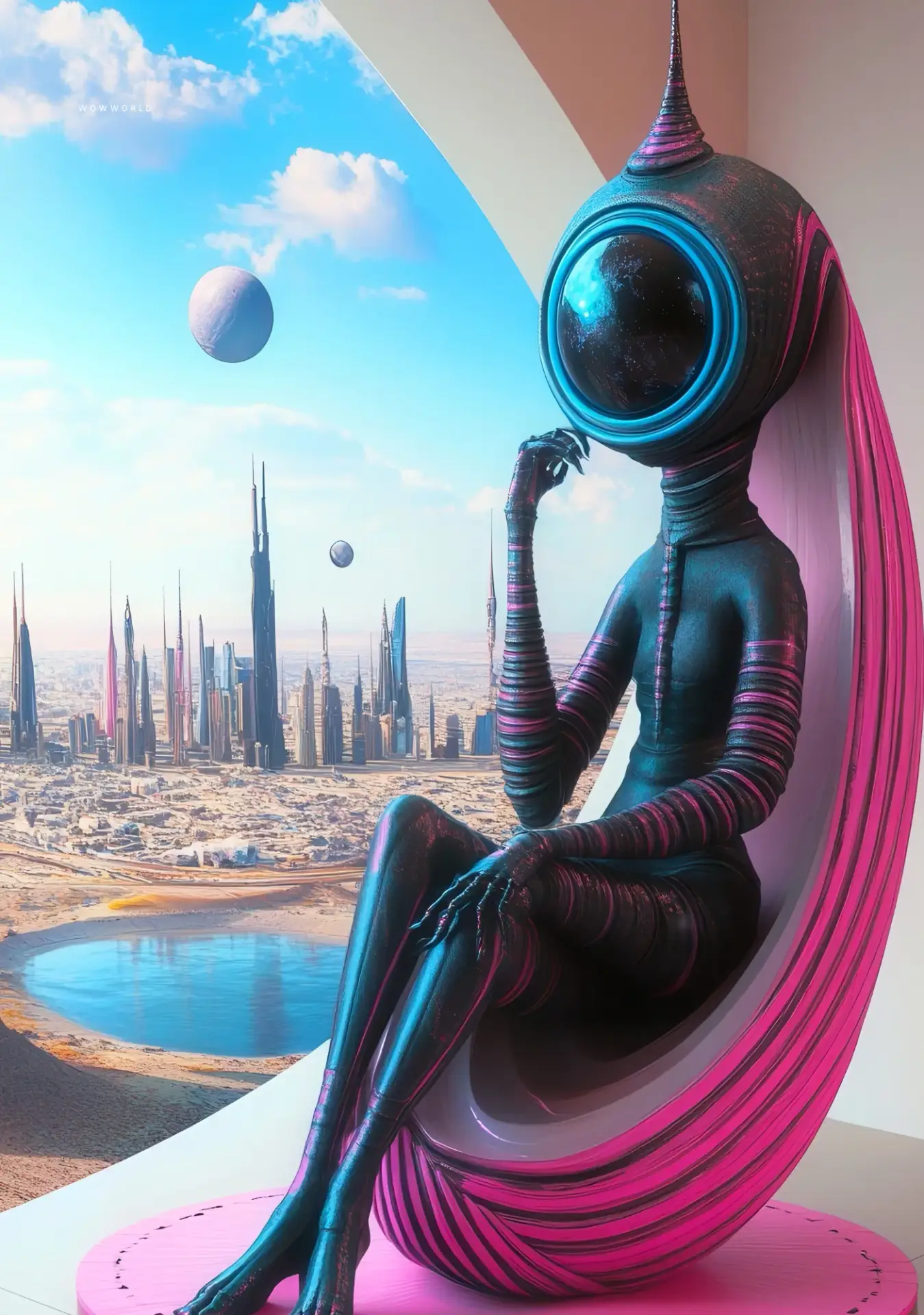
Space Worlds: Poseidora by Lea Universe
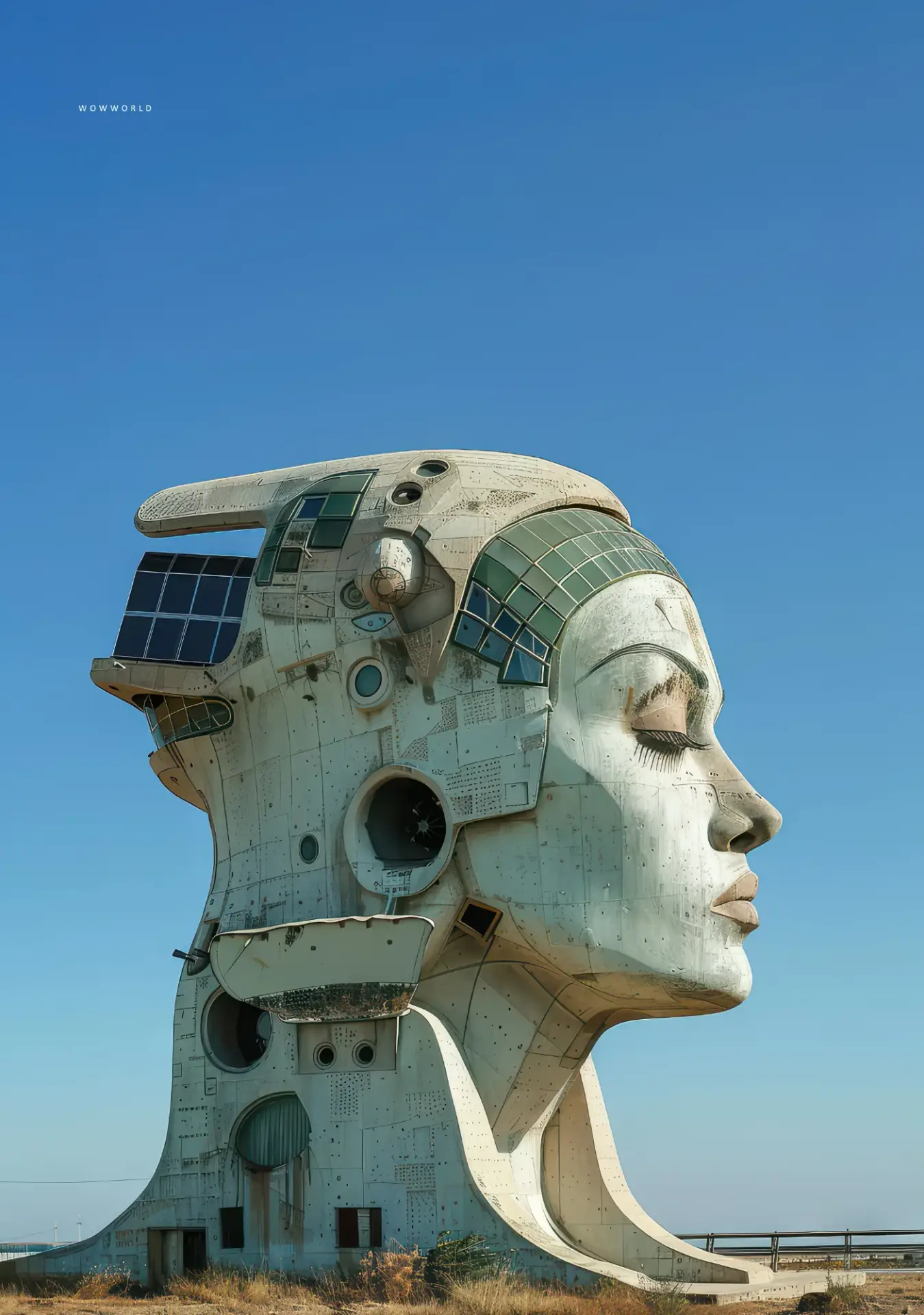
Architecture AI Design Concepts by Rolando Cedeno de la Cruz